

Tech Talk
Using Multiple Drivers and Their Effects
Chris Hagen | Senior Principal Engineer

Many speakers today use multiple drivers for a frequency band. Although the typical example speaker system uses a single woofer, midrange and high-frequency device (or all three), using multiple drivers for one band of the audio spectrum can bring various benefits in performance. There are a few pitfalls, but as we will see there are ways to minimize and even eliminate these by careful design and end up with a great product.
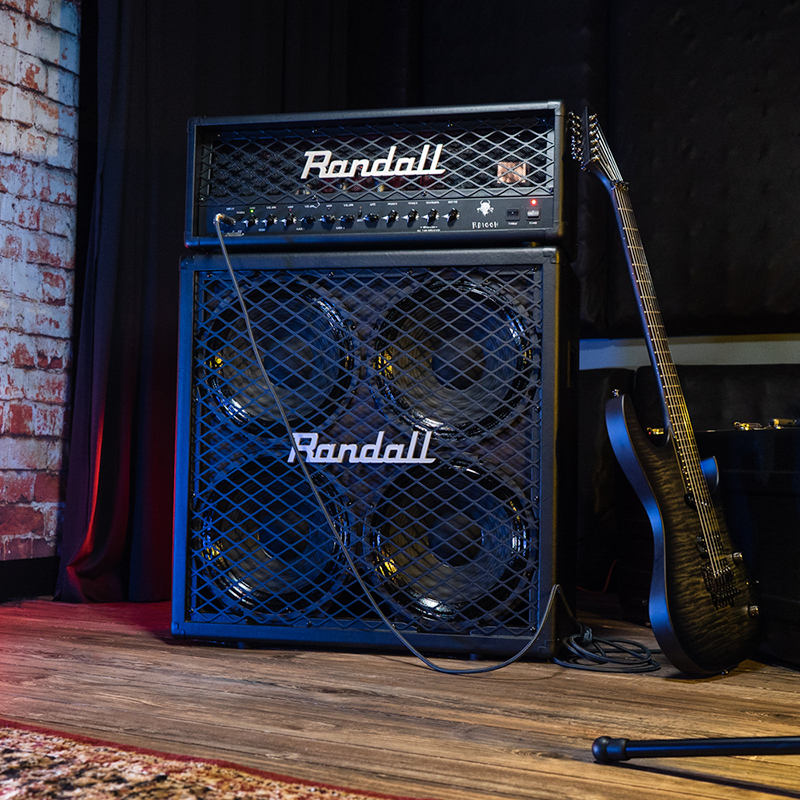
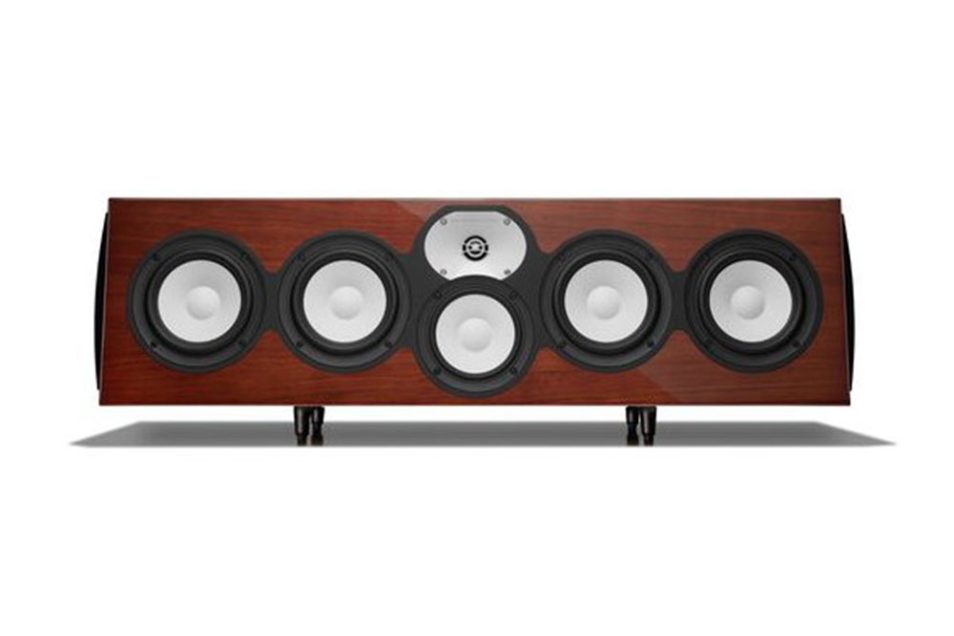
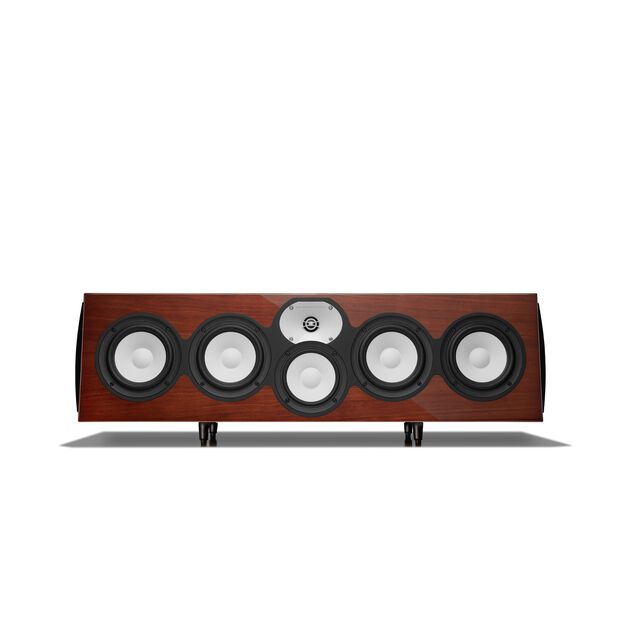
Systems with multiple drivers used in one “way” of the crossover can range from tower systems with multiple woofers near each other to multiple mid-bass drivers in a center channel to large guitar cabinets used by rock bands. This would make it sound like the following comments only apply to drivers reproducing lower frequencies, but these comments also apply to multiple midrange or high-frequency drivers. Further on in this article, we will see that the shortening of wavelength with increase in frequency tends to keep multiple higher frequency drivers out of high-quality home speakers. There is also the special case where multiple drivers are used in a vertical array with careful signal shaping so as to mimic the radiation pattern of a point source, such as in the JBL Professional CBT models.
When multiple drivers are used in a speaker system instead of one, the changes they bring can be obvious or a little more hidden. The most obvious is the size difference – multiple drivers are larger in one dimension than one driver. This means that there is more cone – or emissive – area as well. But adding more drivers also requires a wiring scheme, made up of series and parallel wiring, that can change the impedance of the load to the amplifier. Other not-so-obvious changes are cost of the drivers as well as main acoustic effect – lobing, or comb-filtering at higher frequencies.
In the Tech Talk in the June 2019 Harman Luxury Audio Newsletter, I covered the physical size aspect of using multiple drivers. Using multiple drivers increases the cone area by an integer factor (2x, 3x, etc.) and so to move the same amount of air, the drivers move one divided by that integer (x/2, x/3, etc.).
So this extra emissive area compared to a single driver requires less excursion for the same sound pressure level (SPL) level. Since more distortion is created with higher excursion, this also helps lower distortion. And SPL and bass extension get better as volume displacement capability increases so being able to move more air by a factor of two or more improves deep bass extension capability and increases SPL headroom. Typically, using two of one driver size is equivalent to somewhere between one and two driver sizes above it in emissive area (so, two 8” woofers has a cone area between a 10” and a 12” woofer).
Further, multiple drivers yield more emissive, or radiating, area but uses a narrower cabinet appropriate for the smaller driver. From the popularity of the form factor over the years, we know that it points more towards tower-type speakers.
Connecting the drivers has two possibilities. I will leave out for now the situation where one driver has more components in front of it in the crossover and point out that the drivers could be wired in parallel or in series. Wired in parallel, the single driver’s impedance is divided by the number of drivers, and wired in series, the combination has an impedance equal to that of the single driver multiplied by the number of drivers used. Series wiring typically isn’t used on its own because it raises the output resistance of the amplifier and causes more of a bump in the low end of the frequency band.
With many drivers in parallel, too low a load may be created for the amplifier. The 4x12 guitar cabinet shows one way to create the proper load – its drivers are wired so that there are two sets of series-wired drivers, and then these sets are wired in parallel. The series wiring doubles the impedance of the single driver and then the parallel wiring halves this double-the-impedance to create the same impedance as a single driver, which then correctly matches the correct load for the amplifier.
And although impedance might sound like a negligeable topic, it has a great effect on sensitivity. Relative to a single driver, the multiple-driver solution will have more output with a given input. It is not a simple addition – adding another driver doubles the area, adding 6 dB. One must also calculate what happens with power. In the case of two parallel drivers, the impedance is halved, which doubles current and so doubles power. But this is only 3 dB, so the affect of adding the driver is 6 dB for additional area minus the 3 dB to adjust the power back to the same as for one driver, netting a 3 dB increase in sensitivity.
Another aspect of using multiple drivers is that if they are all tuned the same in their enclosure(s) as the single driver, then the cabinet will be as many times larger as there are drivers. If the cabinet is smaller, then either driver parameters need to be adjusted or the low frequency roll-off will not be the same. Further, since motors and frames are close in size between two standard-size drivers, it costs more to use two slightly smaller drivers.
Many speaker companies use off-the-shelf drivers, and so impedance and parameter changes aren’t possible. But HARMAN Luxury Audio engineers simply design drivers so that they have the correct parameters so that the cabinets are the smallest for the performance and with the chosen wiring, the end impedance is the correct load in the system. As we have always done, every model series has custom drivers designed for it, with some reused within the model series where appropriate.
A system with multiple drivers in one of its ways has one final feature that must be discussed. And this is the summation of the output of the individual drivers. The summation between drivers is affected strongly by the angle between each driver and the listener along the line between the driver centers. Since the drivers are offset, the pathlength from each driver to the listener is different. The difference between pathlengths is critical – when it is small relative to half the wavelength being reproduced, constructive summation occurs, and radiation is like that from a single source. But as the reproduced wavelength gets smaller (frequency rises) and nears even multiples of this pathlength difference, then the driver outputs cancel, and destructive summation or interference occurs. At 100 Hz, the wavelength is about 11 feet so subwoofers with dual drivers, as discussed in the 2019 Tech Talk, are not affected by pathlength difference. This is the situation with ka less than or equal to 1 in the following image.
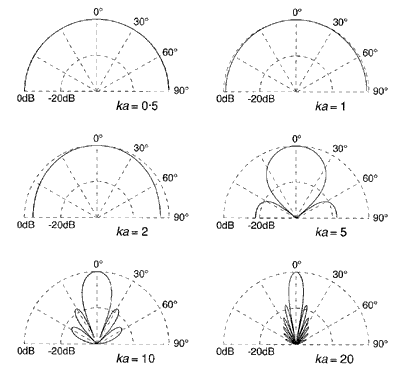
At higher frequencies, the wavelength shrinks by the factor of the frequency increase. So, at 1 kHz (10 times 100 Hz), the wavelength is 1/10 that at 100 Hz, or about 1.1 foot. Now, depending on spacing of the drivers, nulls can occur very similar to the lobing of a larger driver in the direction of the multiple driver spacing. This is the situation in the diagram with ka = 4 or larger. But this lobing occurs only at the ends of the driver array. Across the “waist” of the array, where width is one driver wide, the dispersion pattern is similar to that of one driver. In the case of the 4x12 guitar speaker, it beams like a 24” (or so) speaker.
At this point, it is easy to see why this is a bad thing – moving one’s head side-to-side while listening to a speaker with multiple drivers mounted horizontally will sound louder and softer at different frequencies depending on head position.
But what can be done about this? The simplest answer is to not use the multiple drivers up to a frequency where this becomes an issue. Another option is to add another crossover section to one of the drivers and roll it off lower in frequency before it can produce this effect with the other driver that is allowed to go higher in frequency (what I referred to in the impedance paragraphs). If a two-way system uses this feature because it has two woofers, it is called a 2-1/2-way system. This is because the woofer that mates to the high frequency device does not have a high pass filter on it (other than the cabinet) like a midrange would.
Note that with common midranges and tweeters, the physical size typically is 4 to 5 inches. This means that the driver centers can’t be closer than 4 or 5 inches, which translates to a frequency of 1300 Hz to 1700 Hz. So some designs have smaller faceplates designed to avoid this acoustic property, but eventually they must end with one driver for the highest frequencies.
In summary, we see that using multiple drivers in speakers takes a lot of consideration. Size and cost must be considered, but also frequency band of usage. And when that usage band goes higher in frequency, the engineers must be clever enough to design the system so that the natural acoustic properties don’t damage the reproduction of sound. Once done though, the multiple drivers can have lower distortion, higher output and deeper bass, so it is well worth the effort.