

What's New
Problem Solving and Supplier Improvement: DMIAC and Six Sigma
By Dale Seidlitz | Manager Global Quality & Compliance Luxury
Lifestyle Division

At HARMAN, DMIAC is one of the many Quality Tools we use with our Suppliers, Manufacturers and Design Teams to continuously improve our products.
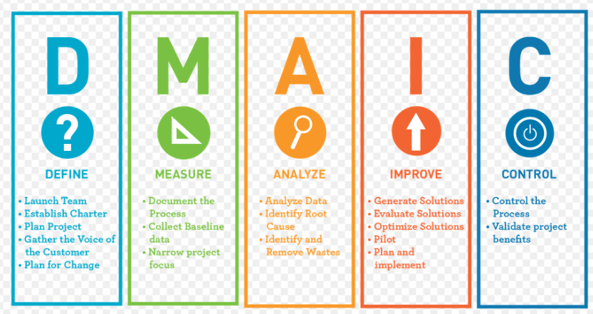
The Six Sigma term DMAIC stands for Define, Measure, Analyze, Improve, and Control. It is a structured, data-driven, five-step approach used to improve existing business processes by identifying problems, finding root causes, and implementing effective solutions to achieve consistent, high-quality performance.
Here’s a simple explanation of each phase in DMAIC:
- Define: Define the problem clearly. DMAIC starts by narrowing the issue, identifying the customer needs, and setting a clear goal so teams do not waste time on a vague problem.
- Measure: Measure the current process. Before changing anything, the team gathers baseline data so it knows how the process is performing today and uses this data to confirm solutions developed after the Analyze phase give the desired improvement.
- Analyze: Analyze the root cause. The collected data is examined to identify the root causes of defects or variations. The method pushes teams to look at past symptoms and verify what is really causing the problem, which prevents quick fixes or guesswork that could fail.
- Improve: In this step, solutions are developed and tested to address the root causes found in the Analyze phase. Solutions are implemented that are tied to data and successful validation testing.
- Control: The final phase ensures that the improvements are sustained over time. It involves monitoring the process, setting up controls, and making sure the process does not revert to its old ways.
Why it matters
DMAIC works especially well in organizations because it creates common language, better decision-making, and more reliable results across teams. It is most useful when a problem is important, somewhat complex, and worth solving in a lasting way rather than with a quick guess.
DMAIC is one of the most effective problem-solving tools an organization can use because it brings structure to messy problems. Instead of jumping straight to solutions, it guides teams through five disciplined steps: define the issue, measure current performance, analyze the root cause, improve the process, and control the results.
Its greatest value is that it forces leaders and employees to rely on facts, not assumptions. That means the team spends less time arguing about opinions and more time understanding what is really happening in the process.
DMAIC also helps organizations solve problems that matter. By beginning with a clear definition and a measurable goal, the team focuses on work that is meaningful, manageable, and tied to customer or business needs.
Another major advantage is sustainability. Many improvement efforts succeed briefly but fade over time; DMAIC’s Control phase helps prevent that by making the new process part of standard practice.
In the end, DMAIC is valuable because it turns problem solving into a repeatable system. For organizations that want better quality, lower costs, and more consistent performance, it provides a practical roadmap from problem to permanent solution.

Six Sigma
Six Sigma as a quality management philosophy was introduced by Motorola in the 1980s to achieve near-perfect process outputs by minimizing defects. One of the outputs of this philosophy was the introduction of DMAIC and its evolving into the disciplined five-phase approach described above.
Six Sigma has had a profound impact on manufacturing by providing a structured, data-driven methodology to improve processes, reduce defects, and increase efficiency. Key impacts of Six Sigma in manufacturing include:
- Increased Productivity: Six Sigma uses statistical tools to identify inefficiencies and bottlenecks, allowing manufacturers to streamline production processes and optimize resource use. This leads to higher throughput and better use of time and materials.
- Higher Quality: By focusing on reducing variability and defects, Six Sigma helps manufacturers deliver consistent, high-quality products. This reduces scrap, rework, and customer complaints, building a stronger brand reputation.
- Cost Reduction: Minimizing defects and waste through Six Sigma leads to significant cost savings in raw materials, labor, energy, and overhead. It also reduces unexpected downtime by addressing equipment and process issues proactively.
- Enhanced Competitive Advantage: Manufacturers using Six Sigma gain agility to respond to market demands with faster delivery and better-quality products, making them more competitive globally
Overall, Six Sigma has transformed manufacturing operations by empowering teams with tools and processes that drive continuous improvement, operational excellence, and sustainable growth.
Note: HARMAN has numerous Six Sigma Professionals throughout the company. Harman also offers numerous internal courses on problem solving for its employees including Yellow Belt, Green Belt, and Black Belt Six Sigma Courses.
If you have any questions or would like any more information regarding DMAIC or other Six Sigma problem Solving Tools feel free to contact me. [email protected]