

Tech Talk
The Evolution of Audio: Unpacking the Power and Precision of Class D Amplification
Kevin Kent
Senior Global Product Line Manager


What was once viewed with skepticism by some audiophiles, Class D amplifier technology has undergone a remarkable transformation. Today, cutting-edge Class D designs are not just challenging the status quo; they're setting new benchmarks in audio performance, efficiency and design innovation. If you're seeking exceptional sound quality without the traditional compromises, it's time to take a closer look at the compelling advantages of modern Class D amplification.
Shattering Sonic Ceilings: Can Class D Truly Deliver Audiophile-Grade Sound?
Let's address a common question head-on: Can Class D truly rival, or even surpass, traditional amplifier classes in sound quality? The answer is a resounding yes.
Modern high-end Class D amplifiers have evolved significantly, boasting specifications for low-noise, minimal distortion, and power ratings that are as good as, and often better than, many revered Class A/B amplifiers. This is especially true when considering the performance-to-price ratio, where Class D often delivers unparalleled value.
But how does it achieve such clear, accurate sound with precise imaging?
- Advanced Modulation and Feedback: Sophisticated pulse-width modulation (PWM) techniques and advanced feedback loops are key. These designs meticulously correct errors and non-linearities in real-time, dramatically reducing distortion and noise far below audible levels.
- Exceptional Damping Factor: Class D amplifiers inherently exhibit a much higher damping factor compared to many conventional designs. This characteristic gives them better control over the movement of a speaker's voice coil. The result? Tighter, more articulate bass, improved transient response, and an overall soundstage that is remarkably clear and precise. This control is fundamental to accurate sound imaging, allowing you to pinpoint instruments and vocals within the performance space.
The outcome is an audio experience that is both powerful and nuanced, faithfully reproducing the source material with superb clarity.
It's important to note that exceptional audio quality is not exclusive to one class. Both Class A/B and the more advanced Class G amplifiers are revered by audiophiles and deliver stunning performances.
- Class A/B has long been the traditional gold standard, known for its excellent linearity and smooth, "musical" sound. However, it is inherently less efficient, converting a significant portion of power into heat, which necessitates large heatsinks and robust power supplies.
- Class G is a clever evolution of Class A/B, utilizing multiple power supply rails that switch on as needed. This design significantly improves efficiency over Class A/B, especially at lower listening levels, representing a bridge between classic design and modern efficiency demands.
The Efficiency Edge: Smarter Power, Sleeker Designs and Tangible Savings
At the heart of Class D's appeal is its exceptional energy efficiency. This isn't just an engineering footnote; it has profound benefits for both manufacturers and consumers:
- Minimized Energy Waste: Class D amplifiers convert a significantly higher percentage of input power into usable audio output. Unlike traditional designs that dissipate substantial energy as heat, Class D runs remarkably cool.
- Smaller, Lighter, More Modern: This high efficiency means less need for bulky, expensive power supplies and extensive cooling systems (like massive heatsinks and fans). This empowers manufacturers to:
- Create slimmer, more compact and aesthetically pleasing products. The sleek design of the JBL MA710, with its metal body and elegant glass front panel, is a prime example of this modern design language, making it highly appealing for space-conscious consumers or those desiring a minimalist setup.
- Employ simpler, often passive, cooling solutions. For instance, the MA710 utilizes cleverly integrated top ventilation holes, reducing manufacturing complexity and cost while maintaining silent operation.
- Cost Savings for Consumers: The benefits extend directly to your wallet. Efficient power management, as demonstrated by the JBL MA710 using a 500-watt power supply to deliver a robust 110W per channel at 8 ohms (and 160W at 4 ohms), translates to lower electricity bills over the amplifier's lifetime. Furthermore, the reduced component cost and manufacturing simplicity can lead to more competitively priced high-performance audio gear.

Scalability and Versatility: Powering Every Need
Class D technology is inherently scalable. This allows manufacturers to efficiently develop a diverse portfolio of products without complete redesigns for each model.
For example, a product line like JBL's MA series (encompassing the MA310, MA510, MA710, and the higher-powered HP models) can offer varying channel counts and power outputs. This caters to a wide spectrum of consumer needs, from modest stereo setups to complex multi-channel home theater systems, all built upon the same core efficient and high-performing technology.
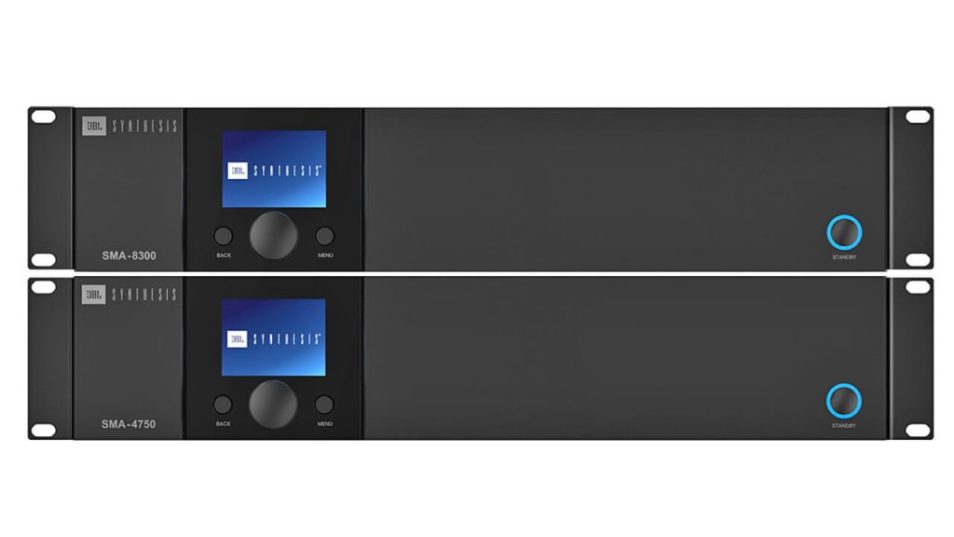
This scalability reaches its peak in professional-grade applications, as exemplified by the JBL Synthesis SMA series, including the SMA-4750 and SMA-8300. These powerhouse multi-channel amplifiers are designed for high performance home theaters and professional installations, where the Class D technology inside allows these units to deliver immense, clean power. For instance, the 4-channel SMA-4750 provides 750W per channel, and the 8-channel SMA-8300 offers 300W per channel, all from a surprisingly compact, flat stackable and rack-mountable chassis. Achieving this level of sustained power density with traditional Class A/B or G designs would require a much larger, heavier, and hotter-running amplifier, making Class D the ideal solution for modern, high-channel-count audio systems
JBL Synthesis SMA amplifiers
Nearly 17,000 watts delivered in just six 2U rack spaces!

Class D as a Sustainable Platform: The Eco-Conscious Choice
In an era where environmental responsibility is paramount, Class D amplification stands out as a more sustainable audio solution:
- Reduced Energy Consumption: Its inherent efficiency means less electricity is drawn from the grid during operation, leading to a smaller carbon footprint over the product's lifespan.
- Fewer Raw Materials: Smaller components and simpler cooling systems translate to less metal, plastic and other materials used in manufacturing.
- Easier Recycling: With fewer and lighter components, the end-of-life recycling process is simplified, with less material to break down and process.
Choosing Class D is a step towards enjoying high-fidelity audio more responsibly.
Concluding Thoughts: The Future is Efficient, Powerful and Clear
Modern Class D amplifier technology has matured into a formidable force in the audio world. It offers a compelling combination of exceptional sound quality, groundbreaking efficiency, and design flexibility, all while promoting a more sustainable approach. Whether you're an exacting audiophile, a home theater enthusiast, or simply someone who appreciates great sound in a sleek package, the benefits of today's Class D amplifiers are too significant to ignore. It’s clear that Class D is not just a viable option; it's shaping the future of audio amplification.