


Tech Talk
The 8-Inch Woofer for Summit AMA
George Short
Senior Principal Engineer - HARMAN Luxury Audio

When most of us dream of woofers, it looks something like this:

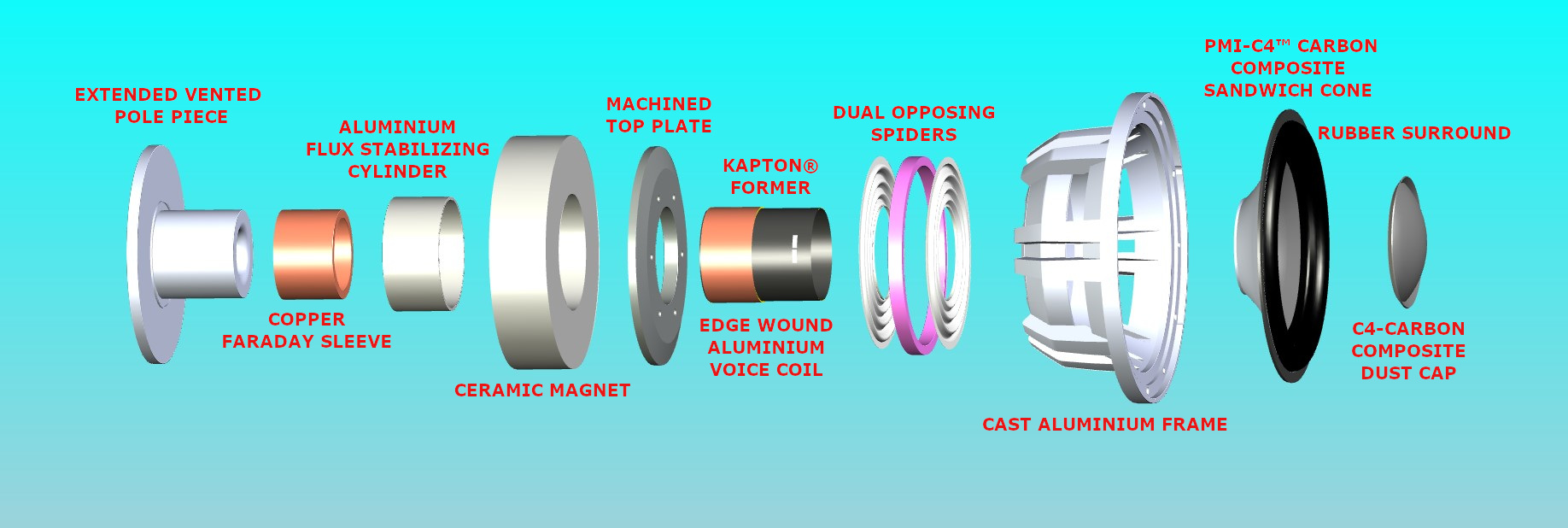
These design features – optimizing performance via leveraging 80 years of transducer design know-how, the latest FEA, and the most modern manufacturing techniques in the world – yielding a modest looking 8-inch transducer that sets a new standard for the state of the art.
Customarily in product descriptions one creates a “features” list…. so here goes:
Design Feature:
Extended Vented Pole Piece
Copper Faraday Sleeve
Aluminium Flux Stabilizing Cylinder and Ceramic Magnet
Kapton® Voice Coil Former
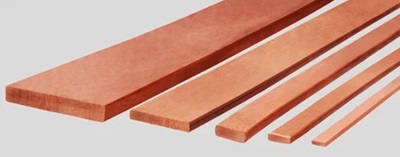
Edgewound Copper-Clad-Aluminium Ribbon Voice Coil
Dual Opposing Spiders
C4™-PMI Sandwich Cone with Rubber Surround
C4 Dust Cap
Good stuff. But what does all this do? Well, in developing this transducer, emphasis was placed on optimizing every single element for performance, durability and enduring quality.
Extended Vented Pole Piece: As discussed in my recent Tech-Talk “Improving Woofer Motor Linearity with Finite Element Analysis”, by extending the pole piece beyond the top plate we symmetrize the stray flux above and below, greatly reducing distortion. Also, the pole acts as a heat wick that pulls thermal energy from the inside of the voice coil into the pole steel. Lastly, cone motion forces air flow through the pole vent and cools the steel.
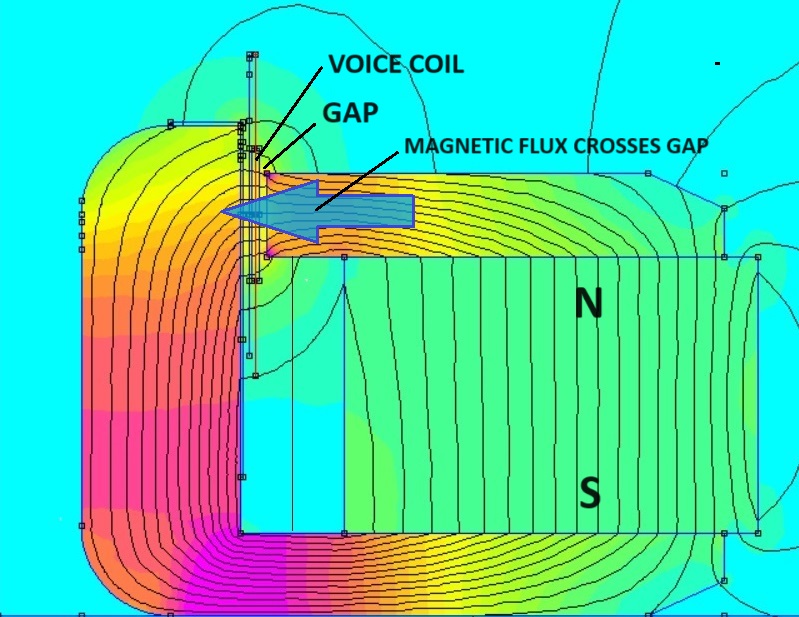
Aluminium Flux Stabilizing Cylinder and Ceramic Magnet: in almost all HARMAN Luxury Audio woofers, these features are used together. Like the Copper Faraday Sleeve, the aluminium cylinder provides an induced sympathetic current loop, but in this case it surrounds the voice coil and is internal to the magnet, stabilizing the magnetic field within the magnet itself. Also like the Faraday Sleeve, The aluminium cylinder wicks heat from the voice coil windings and conducts it to the magnet. It is most effective at low frequencies.
The combination of the Copper Faraday Sleeve and Aluminum Flux Stabilizing Cylinder reduce the woofer’s distortion by an order of magnitude.
Kapton® Voice Coil Former: Kapton® is an amazing film, even more amazing when one considers it was invented in 1965 (by Dupont). The grade of Kapton® we use has been optimized for voice coil former applications, and features excellent dimensional stability, mechanical stiffness and unprecedented durability. The surface is specially treated to permanently bond to voice coil, spider and cone adhesives.

Dual Opposing Spiders: Spiders are essentially round woven accordions. As they move back-and-forth, they stretch-compress-stretch about their rest shape, and invariably they have a preferred direction. By using dual spiders mounted in opposition, any nonlinear motion in one is cancelled by the opposite non-linear motion in the other, resulting in a perfectly linear suspension. Additionally, the stress on each spider is halved, doubling durability.
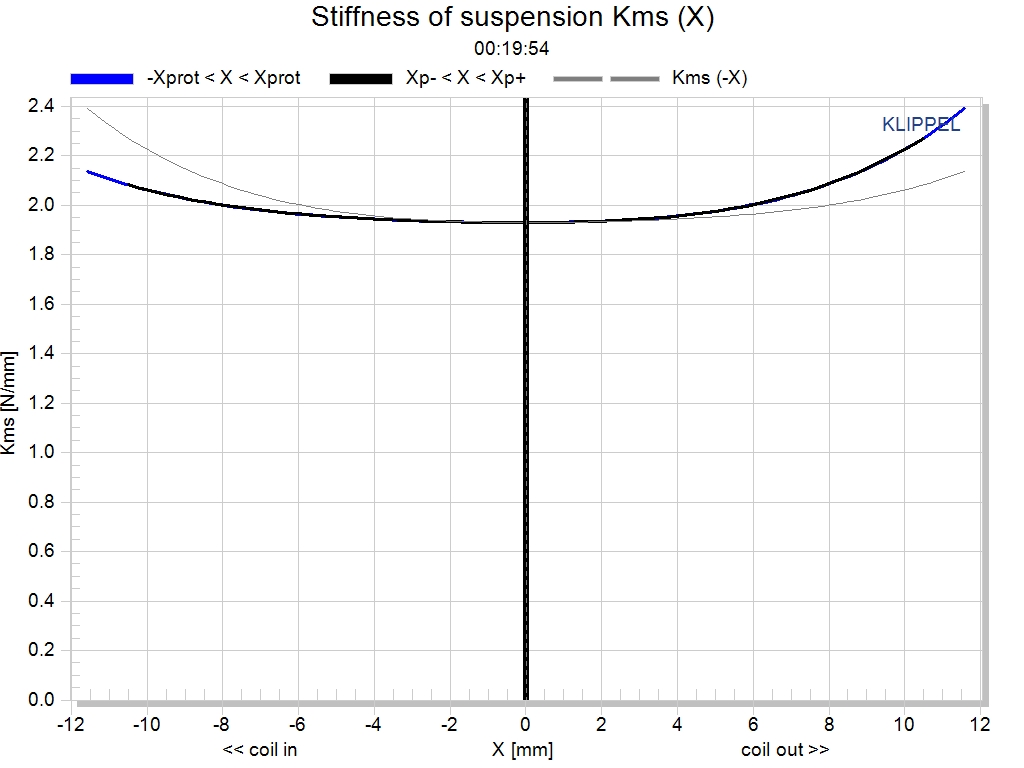
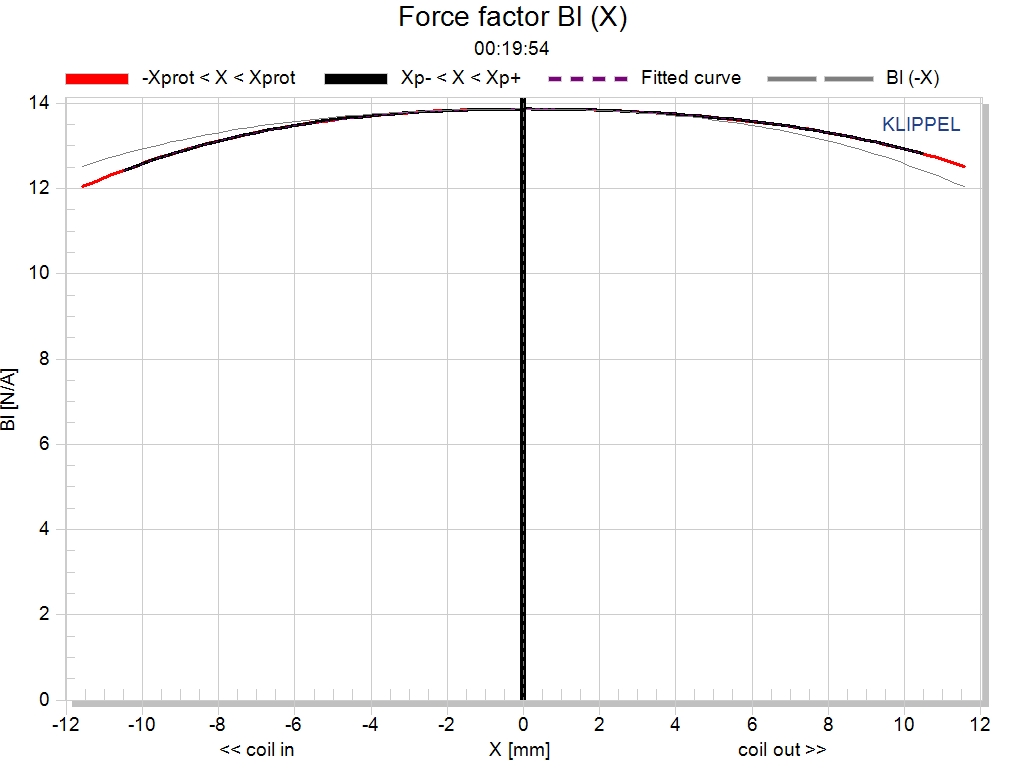
Transducer excursion analysis shows the Summit JW200 can move 26mm peak-to-peak – more than one inch – and still perform within its optimum ±10% linear window. To put this in perspective, if we scaled this to a 15” woofer, it would be moving 52mm (2 inches) peak-to-peak! Yikes! But….yea.
PMI-C4™ Composite Sandwich Cone with Rubber Surround: The best of the best. C4™ is Carbon Cellulose Composite Cone, a proprietary compound developed by JBL. It is a hard pressed, paper thin, rigid skin.
PMI (Polymethacrylimide) closed-cell foam was developed for the aeronautics industry, it is almost lighter than air and can be found in gliders, Formula One racecars, and now Summit woofer cones. By bonding both sides of a thin layer of PMI foam with the C4™ composite, we get a cone that is incredibly light and much stiffer than a single layer cone. For loudspeaker applications this sandwich can actually be too stiff, therefore special adhesives were developed. Applied between the foam and the skin, to add just a whisper of give, cone vibration energy is effectively transmitted to and dissipated within the rubber surround.


The Summit 8-Inch woofer- defining the state of the art:

3D Model by Larry Brown. Rendering by Erik Lundin
The challenge is to design a transducer that can go as deep as many subwoofers, yet exhibits clarity through the center octaves that surpasses dedicated midrange transducers. But for Summit AMA, we would not settle for anything less!