

Tech Talk
Vented Boxes Keep Getting Better
George Short
Senior Principal Engineer

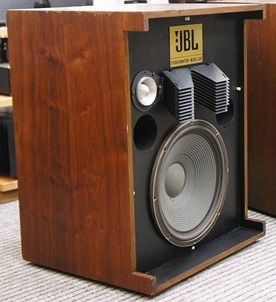
The early days of audio (the 1940s and early 1950s) were characterized by extremely low powered vacuum tube amplification (1 to 3 Watts) and large woofers mounted in even larger speaker cabinets, with ports employed both to make the speakers more efficient and to extend their bass response. The early JBL loudspeakers were all of this style, the JBL 4320 being of the most popular studio monitors of its day.
The post-WW2 science explosion led to the development of more powerful amplifiers (up to 30 Watts), stronger magnets and efficient manufacturing practices, and a home audio system became an overnight necessity. While advances in electronics and recording techniques continued, the science behind what actually went on inside of a loudspeaker cabinet remained a bit of a mystery.
In the 1960s Dr. Neville Thiele developed the math describing vented box loudspeakers, and in the 1970s Dr. Richard Small1 quantified small signal parameters required to accurately predict the performance of a woofer in a vented box at low volume level. Importantly, he also developed methodologies to measure these parameters.
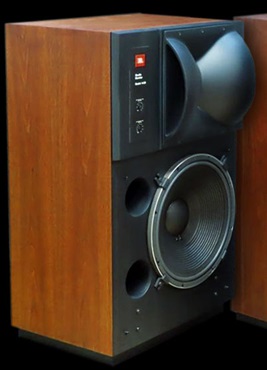
This advancement in turn allowed loudspeaker designers to define the woofer’s physical characteristics (called their “Theile-Small Parameters”) to optimize required box volume, band width, bass extension and character. The beauty of this process is that some very specifically defined “alignments” consistently sounded better than others. The woofer designer could then target and reverse engineer the woofer’s material properties: the magnetic elements (called “hard parts”) and moving elements (called “soft parts”) to build a transducer that perfectly matched the target alignment. (JBL 4430 from 1981)
Motor Hard Part Improvements, the first revolution
Up until then, efficient use of amplifier power was more important than low distortion at high volume, but that changed as transistor amplifiers became mainstream. More powerful amplifiers and wilder parties necessitated larger motors and greater cone motion. It became apparent that many home loudspeakers sounded fine at low volume but less satisfying when loud.
The realm of Theile-Small parameters was confined to small signal analysis, therefore little cone motion and consequently very low volume levels. Improvements were needed, the object being to s-t-r-e-t-c-h predictable small signal performance smoothly and reliably into the medium signal and eventually the large signal domains.
Amazingly, one of the largest contributors to distortion was found to be the large magnetic fields generated by electrical current flowing through the voice coil itself. The object of motor design was to create a constant magnetic field through which the voice coil moves, but through the principal of superposition, the process of moving the voice coil distorted the constant field and in turn, the voice coils’ motion. The louder it was played, the more current flowed through the voice coil, the greater the self-generated magnetic field, and the more distorted it became! No one saw that coming.
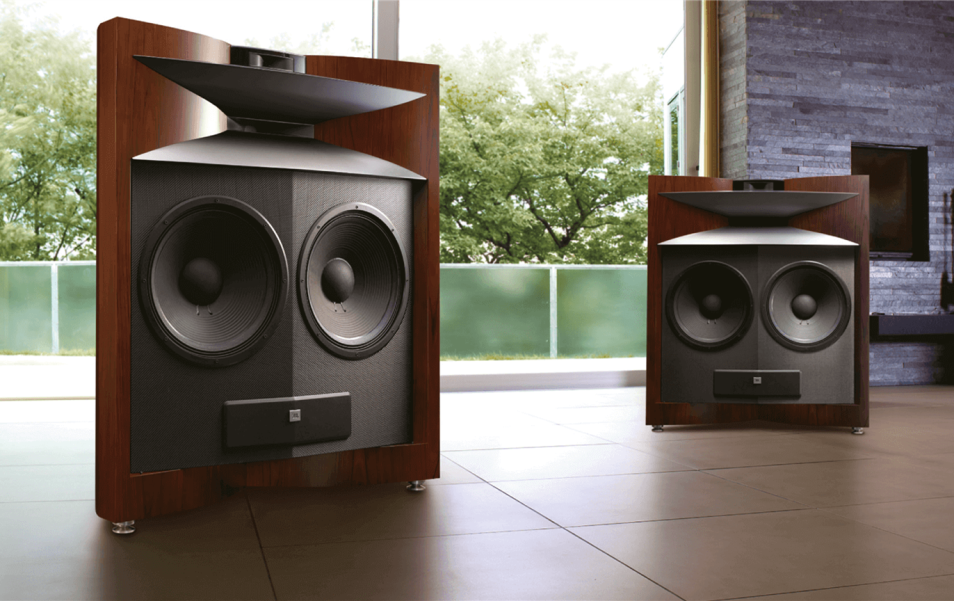
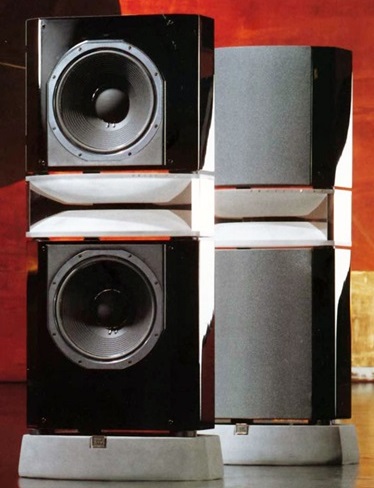
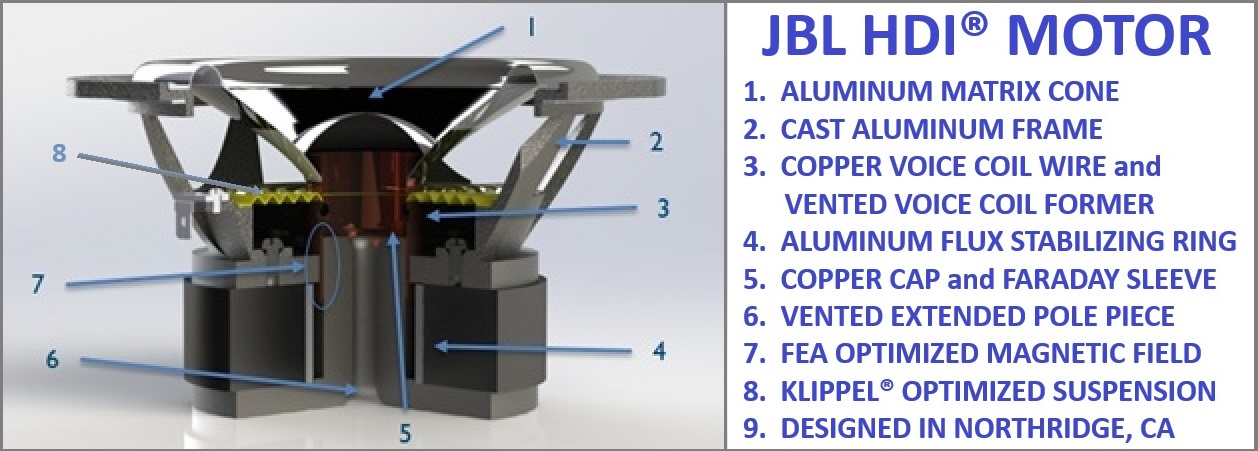
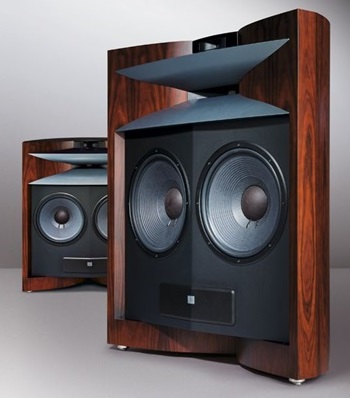
Throughout the 1980s and 90s there was a steady stream of research papers identifying superior materials and methods of protecting the motor from itself, leading to innovative solutions (and patents) dedicated to improving motor stability, particularly here at HARMAN. When one reads the “features” section of our transducer pages, terms like “Flux Stabilizing Ring”, “Copper Cap” and “Faraday Sleeve” are ubiquitous. These very real enhancements were invented by JBL engineers in Northridge2 and have been incorporated into our products ever since. (JBL Everest 55000)
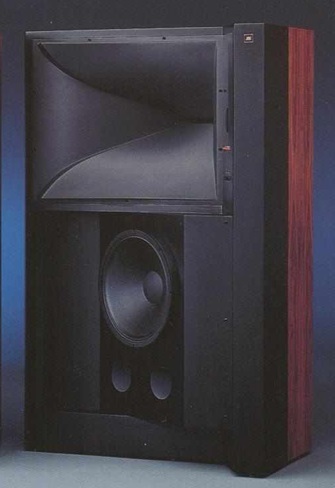
Widespread use of Finite Element Analysis near the turn of the century lead to further advancement, and our ability to simulate subtle component changes began to exceed our ability to build them and precisely measure their effects. It also became apparent that the weakest links in woofer design were no longer the material characteristics of the motor structures, it was the motors’ field symmetry and thermal behavior, together with the linearity of the suspension elements (surrounds and spiders).
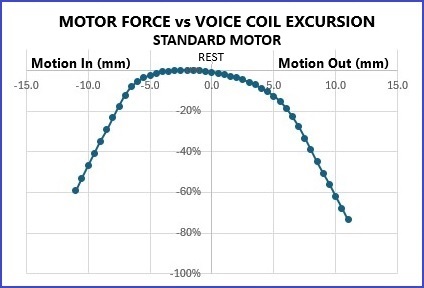
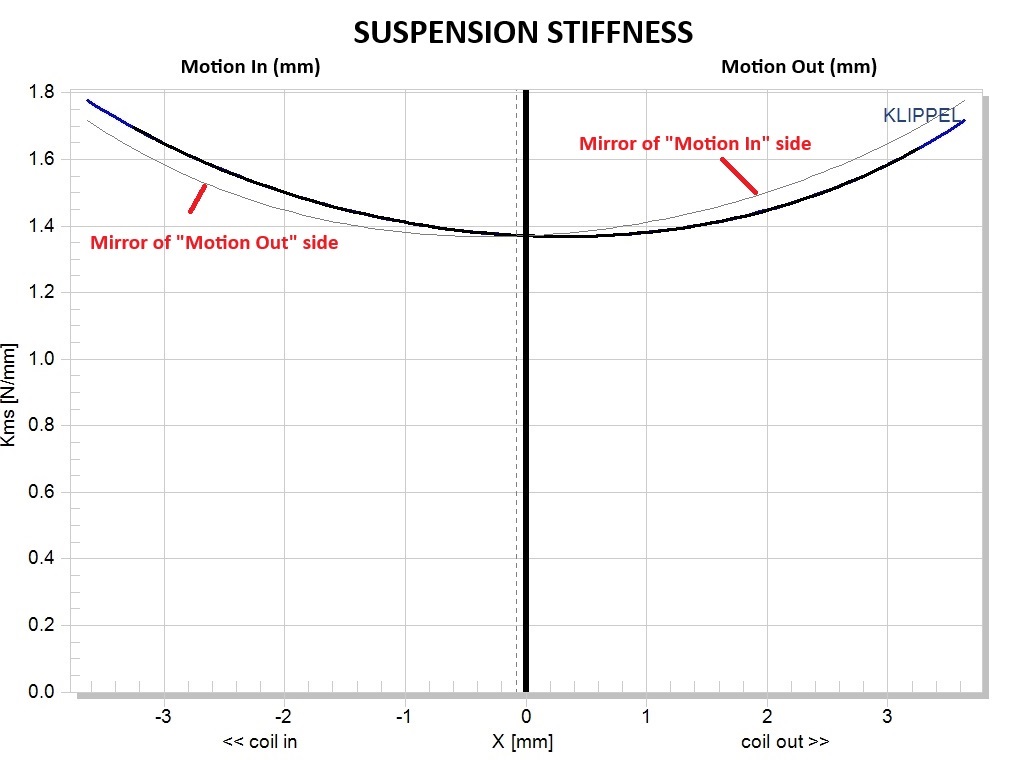
The school of thought began to grow at HARMAN that further improvement could be obtained with greater emphasis in mirror symmetry; that is, in bass frequencies the force experienced by the cone, dust cap and surround (the radiating elements) being a complex sum of the forces induced by the motor (the hard parts) and the restoring force of the spider and surround (the soft parts), a graph of the sum of these forces should be mirror images about the woofer rest position. (JBL K2 S5500s)
Because these elements exhibit their distortion characteristics only under dynamic conditions, new test methodologies had to be developed. HARMAN pioneered this effort, and yet another HARMAN alumni, Dr. Wolfgang Klippel, developed a test-and-measurement system that could measure the linear and non-linear qualities of individual components when the woofer under test is subjected to increasing stress3. Using the Klippel GMBH LSI measurement tool in particular, allows us to quickly isolate the sources of component nonlinearity and thermal limiting, then proceed with iterative improvements.
In my last Tech Talk, “Improving Woofer Motor Linearity with Finite Element Analysis”, the advantage of simply extending the pole piece 5mm above the top plate (to stretch the magnetic field above the gap) is exhibited by these graphs of motor force with excursion. Both motors have similar performance envelopes, but with the optimized motor one can clearly see the improvement in mirror symmetry.:

Port Air Volume Velocity, Taming Turbulence and the end of Chuffing
The last optimization was ingress and egress flares. One may assume the flare shape present in all modern JBL ports is random, but in fact it has been researched and optimized. Too sharp a flare causes the moving air to get squeezed abruptly, the density change causes a “popping” character (compression chuffing). In extremes, it sounds like an airplane propeller. Conversely, an overly gentle flare acts less like a port tube and more like a large opening in the box, and the port loses its ability to effectively pressurize the room; that is, it loses its “poof”. So, while there is a broad window of functionality, the shape of flare is not random at all.
Addressing these tiny details tripled the ports’ clean volume velocity and added 10dB more bass capability. 10db is the difference between 100 Watts and 1000 Watts of clean bass power(!).
Adaptive Active Filters, the Final Frontier
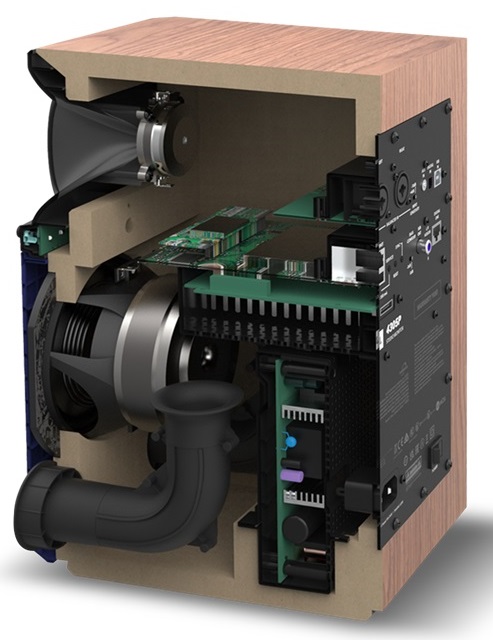
Adding intelligence to the power amplifier and pre-characterizing the woofers’ performance targets, abilities and limitations into the software, the latest generation of active vented loudspeakers can adjust the signal on the fly, maximizing clean bass extension and loudness whilst simultaneously protecting the woofer from physical and thermal damage. In more advanced applications, the processor can also determine how many woofers are in the room, equalize bass output to match the room dimensions and optimized bass smoothness throughout the listening volume. The Holy Grail of vented box loudspeaker performance. (JBL 4305P)
Little Things Add Up
These incremental improvements over JBL’s 80-year history have changed the industry. With all of our products our development team, a group of enthusiastic audiophiles, movie and music buffs, strive to make each new product a little bit better than the generation before. The science makes the difference, but it’s the experience that makes it fun!
CITATIONS and FOOTNOTES
- Richard Small joined HARMAN Becker in 1993.
- Numerous AES Papers and JBL patents, Doug Button and Jerry Morrow among others.
- Wolfgang Klippel was Senior R&D engineer at HARMAN International, Inc., Northridge, CA, USA (1993-1995); responsible for the project “Nonlinear Control of Loudspeaker Systems”; Dr. Klippel went on to form Klippel GMBH, creator and manufacturer of the well-known Klippel Acoustic Analyzer and Software products.
- “Characterization of Nonlinear Port Parameters in Loudspeaker Modeling” Doug Button, HARMAN International - Northridge, CA, USA; Russ Lambert, L3 Communications - Salt Lake City, UT, USA; Pascal Brunet, Samsung Research America - Valencia, CA USA; Audio Group - Digital Media Solutions; James Bunning, HARMAN International - Northridge, CA, USA
- “Maximizing Performance from Loudspeaker Ports”; Alex Salvatti and Doug Button, JBL Professional, and Allan Devantier, Infinity systems; Northridge, California