


What's Up
Mining and Polishing Diamonds
By David Tovissi
Vice President and General Manager
HARMAN Luxury Audio

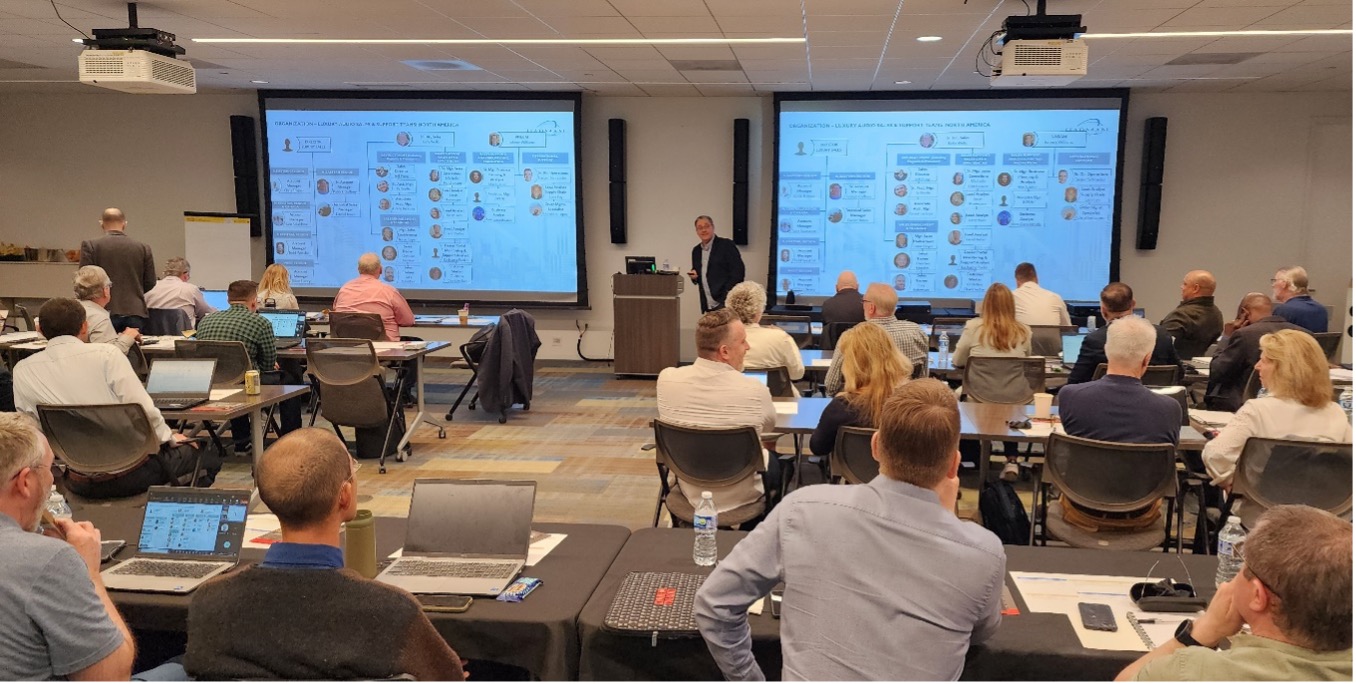
Earlier this week, Luxury Audio stakeholders from across the globe came together in Northridge to align on our strategy to better serve our customers and to have some fun. Taking the time to develop a strategy is important to any company. However, most companies will never find that time due to the hectic pace at which they operate in.
As most of you know, HARMAN is a matrixed organization- meaning that each working group within our company is extremely focused on what we are tasked to accomplish. In the case of the Luxury Audio business unit, our role is to develop, engineer, test and prepare our products for manufacturing. We rely on other departments in the organization to market, sell, deliver, and support the products that we create. That is why we had over 50 stakeholders from every supporting business group come together for our planning.
To develop and execute on a strategy often takes someone from outside of the organization to facilitate such a large group of stakeholders. At HARMAN, the Corporate Strategy team lead by Carolin Reichert, assists the various business units with our planning. This year, Sarvesh Agrawal was our facilitator at our meeting.
Sarvesh kicked off our strategy session by introducing the Strategy Diamond to the group. The strategy diamond was developed by strategy researchers Don Hambrick and Jim Fredrickson as a framework for checking and communicating a strategy.[1] In researching and critiquing the field of strategy, they noted that most companies who took the time and effort to align their employees, were often missing the guidance on how to properly develop and implement their strategy.
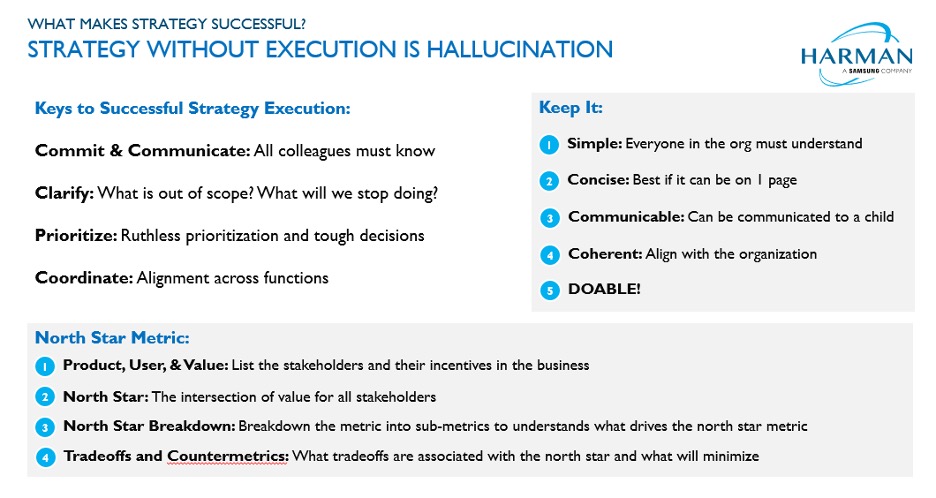
After 30 years of research, Hambrick and Fredrickson concluded that to achieve its strategic goals, they needed to create their strategic plan into several key components. The Strategy Diamond that Sarvesh introduced us to helped us align our stakeholders on the steps needed to create our 5-year strategy.

The first point of the Strategy Diamond is called ARENAS. We were told that to be successful in accomplishing our goals, we needed to define what and where we will be executing our goals. Sarvesh had us answer the following questions.
Arenas
- Which product categories will we be developing?
- What core technologies will be needed in our products?
- What value will these products bring to our dealers and distributors?
- What value will the products bring to the consumer?
- Which channels will these products be offered to?
- What countries will our products be sold in?
The next point of the Strategy Diamond is the VEHICLES on how to implement our strategy. In our time together, we needed to determine what we needed to help us achieve our goals. Sarvesh had us answer a series of more questions.
Vehicles
- What can we develop internally?
- Who will we need to align with to produce our products?
- What organizations do we need to partner with to offer value-added features and benefits.
- What acquisitions should we be exploring to help us achieve our strategic plan?
An example of a recent acquisition to help HARMAN amplify incredible music experiences was the addition of Roon Labs to our portfolio of brands.

The next point of the Strategy Diamond is DIFFERENTIATORS. Here we were challenged to define what we currently are doing and what should we be doing in the future to make our products more appealing to our customers.
Differentiators
- Can we leverage the strengths of Huemen, our industrial design division of the company to make our products more appealing to a broader audience?
- Can we leverage the various divisions of HARMAN to bring more patented technologies?
- Can we leverage the purchasing power of our parent company to offer better pricing?
- Do we need to develop more training assets?
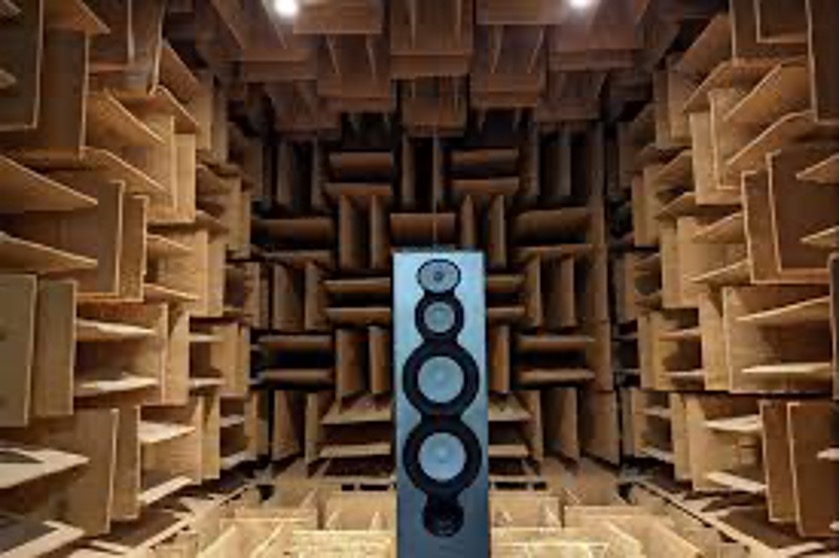
A differentiator could be asset based. For instance, at HARMAN, the Center of Acoustic Excellence in our Northridge campus is equipped with all the tools and test equipment to allow us to develop the best performing loudspeakers on the market at any price.
The fourth point of the Strategy Diamond is STAGING & PACING. Here we needed to define how often we need to update or replace our current portfolio of products? This is something we need to get much better at.
Staging & Pacing
- Can we manufacture our products closer to our regions?
- What resources and capital are required to speed up the pace at which we iterate or introduce new products or series of products?
- Can we consolidate more products in fewer warehouses to mitigate not having the right products at the right time?
The center of the Strategy Diamond is ECONOMIC LOGIC. Here we were tasked to determine if we could leverage the scale of other business units in HARMAN like our Portable or Headphone BU.
Economic Logic
- Can we leverage the Shenzhen-based software development teams to add some of our streaming products on the One Platform.
- Can we partner with our Automotive SBU to optimize costs to do more marketing of our brands?
The Strategy Diamond is a tool that helps companies like ours align, but successful companies also take advantage of the intangibles. One intangible that we leverage in our business unit is the strong relationships that we have with our suppliers, partners, and each other. To foster the relationships with our supporting business units, we also spent a lot of time during our stakeholders meeting having fun.


Every morning, before the meeting started, the Stakeholders were able to see and hear some of the products that will be introducing over the next 18 months. It was their chance to meet with the engineers who were developing the transducers, hardware, crossovers, and networks. I am confident that the attendees felt closer to the products and the team that produces them because of the time we allotted for this activity.
We have all heard the saying, “luck is a matter of being in the right place at the right time” - well, I believe that individuals or companies with a strategic plan have made sure that they are in the right place when luck might happen. Luck is not a bad thing. We just need to recognize when we see it and leverage luck as often as we can. I am lucky to be associated with a talented group of people who are passionate about music and movies. They are committed to developing, engineering, manufacturing, marketing, selling, and supporting the many products that our company offers. As stated earlier, luck is not a terrible thing.