


Tech Talk
Listening & Impressions of Phase in Loudspeaker Systems
By Armando Martinez

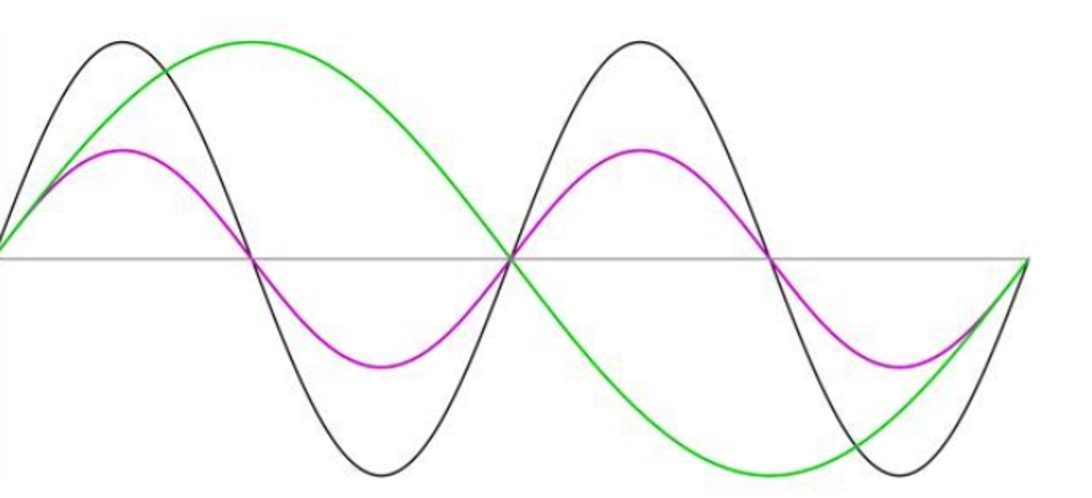
Active listening is one of the critical phases during loudspeaker development. It is the connection between the objective and subjective measurements.
System Engineers carefully consider the science behind loudspeaker design and follow well accepted industry standards. They also listen to the final product with diverse music material.
Our sense of hearing is very sophisticated. Hearing is based on the amplitude of the frequencies. Our ears may be insensitive to phase. While we may not be able to detect phase, it doesn’t mean that we don’t deal with phase. System Engineers have determined that phase differences induced in the processing side, includes mixing, EQ and or listening environment, could have an influence in the magnitude response and become detectable. Humans can hear 0.3dB changes in frequency response and as a result we can determine subtle differences in system designs.
IIR (Infinite Impulse Response) and FIR (Finite Impulse Response) Filters
IIR’s
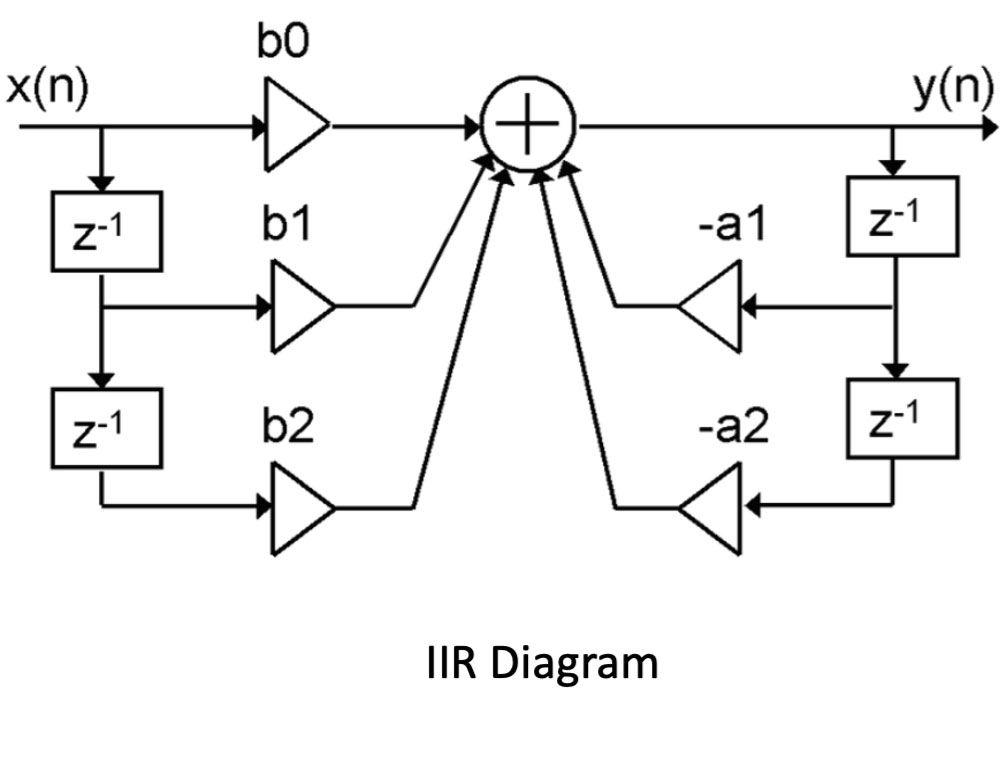
As mentioned in one of our previous Tech Talk articles Tech Talk - Harman Luxury Audio News Tech Talk, IIR filters mimic the exact behavior of analog filters used in crossovers. If used in the processing side, they present a similar magnitude and phase behavior as their passive counterparts. So, in theory we should not expect a deviation in that regard. Digital implementation filters are far more practical to implement and thus expand the potential level of correction applied.
IIR’s are generally more computationally efficient than FIRs. This makes them the first choice especially when processing power is a limitation at the DSP side.
FIR’s
Finite Impulse Response filters have several favorable characteristics. Systems Engineers often use them during system tuning. One of their main characteristics, which is contrary to IIR filters, is that they have linear phase behavior. That means that they preserve the phase relationships between the different frequencies in the signal.
For a loudspeaker system where there is a need to induce phase changes due to the different acoustic components in the system and or with the crossover design, FIR filters become more relevant. They can be used to obtain the desired transfer function and correct phase-related issues. They can be implemented with surgical precision at any specific frequency.
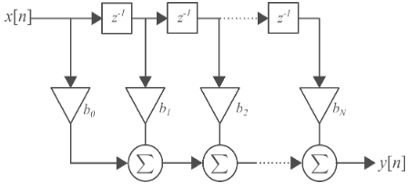
FIR filters offer other advantages in comparison with IIR filters including zero phase, inherent stability, and often are easier to implement.
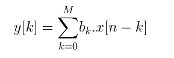
One of the potential limitations derived from the use of FIR filters is latency. The serialized process that depends on several taps can add to the overall system latency. To eliminate latency issues, System Engineers use DSP and accelerators, tailored to specific filters. That allows them to be more efficient to implement.
Use Case
Dealing with phase, one of the key methodologies in system design one must account for is the transition between the different transducers in the loudspeaker defined by the crossover. System Engineers often face challenges where phase changes are reflected in the overall system response.
Several years ago, I conducted my first experiment comparing IIR and FIR filter implementations that had identical frequency response and magnitude. My testing revealed that the On-Axis response was identical. However, the linear phase behavior derived from FIR implementation had a smoother transition at the crossover region. FIR filters translated more accurately. Many industry experts concur with my early findings.
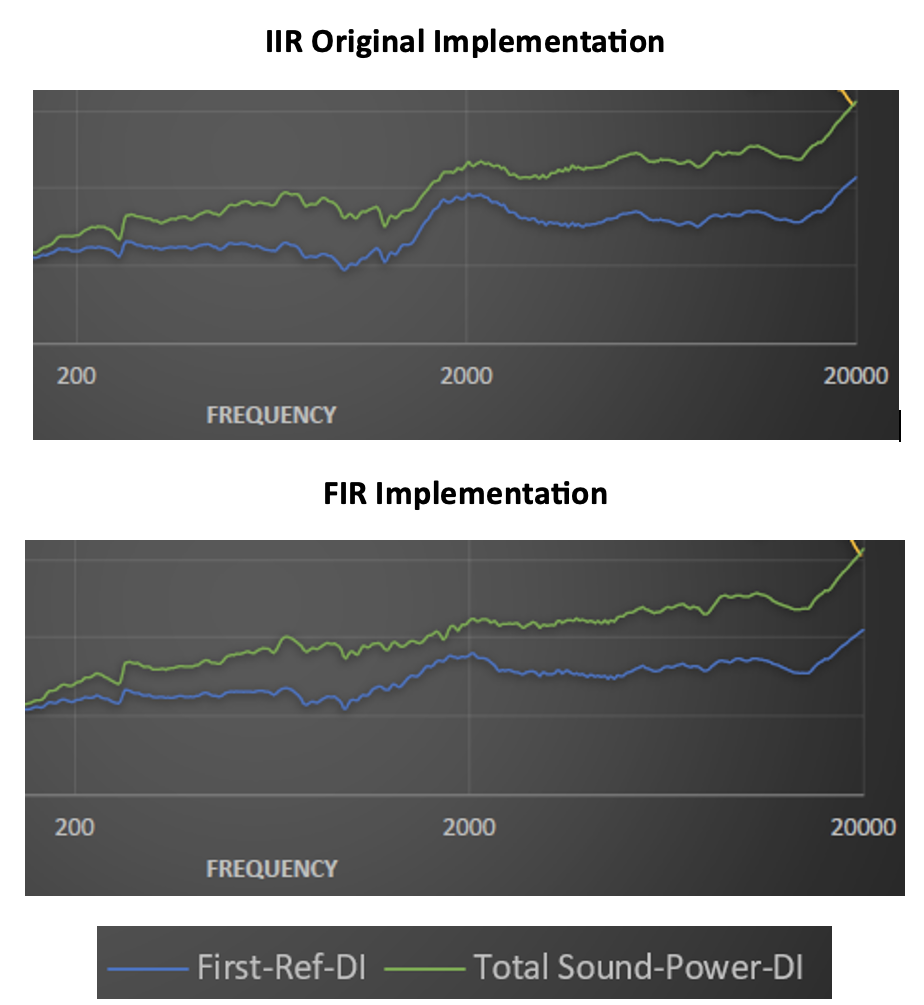
Regardless of which type of filters a Systems Engineer chooses to employ in the digital domain, having both types at their disposal allows them to design a system that can outperform typical passive loudspeaker designs. We can use these filters to either correct the phase shift introduced by passive crossovers or generate linear phase at any frequency over the audible spectrum.
System Engineers can employ a hybrid approach for applying filters to correct specific anomalies during system tuning. Independent of what approach we use, the goal is to make the loudspeaker as transparent as possible. Besides filters, we can also employ DSP to influence our designs. We can utilize DSP for more than loudspeaker tuning. We need a different mindset for designing our loudspeaker systems.
As stated earlier, active listening is an important step to loudspeaker design. HARMAN offers our employees, regardless of role within the company, the chance to be certified as a Golden Ear listener. Our engineers will always seek feedback from our Golder Ears to determine if our designs are performing the way we intended.