

Tech Talk
A Primer on Loudspeaker Impedance
By Mark Glazer
Throughout the history of loudspeakers, the impedance specification has always remained a vague stipulation. This tech talk goes into detail for understanding what it all means.
First, DC resistance is not the same as impedance!
Loudspeaker DC resistance is the measurement to the input of the loudspeaker using direct current. This is a fixed number expressed in ohms. The test can be done with a digital multimeter.
Loudspeaker impedance is the sum of DC resistance and the alternating current, which consists of capacitance and inductance values of the loudspeakers and crossover. This is a sum value and always higher than DC resistance
Loudspeaker impedance is not just one number.
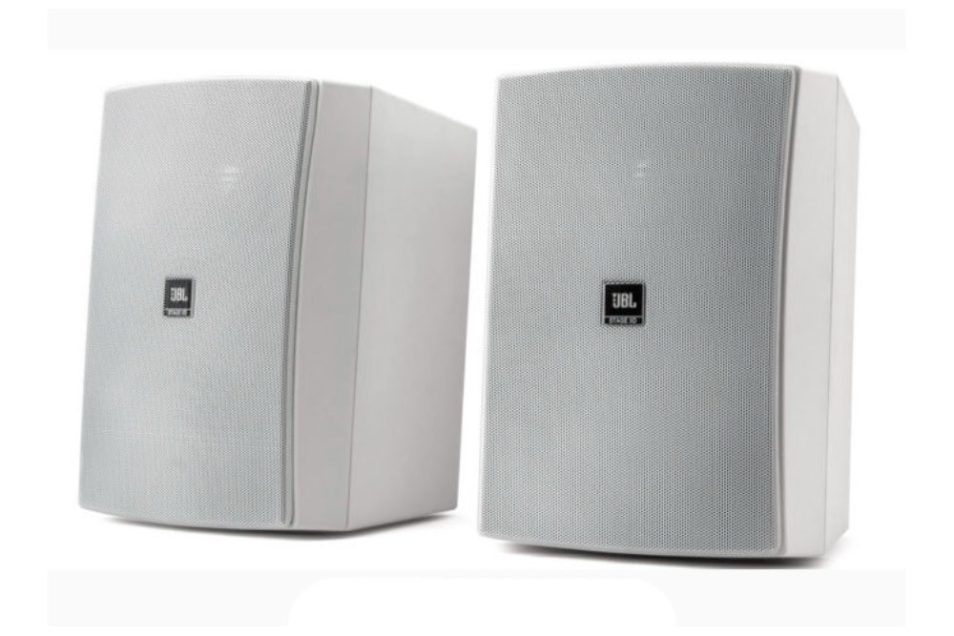
A loudspeaker is voltage driven, meaning that the power amplifier acts as a voltage source for the applied signal without any regard to the current through the load. Figure 1 is the anechoic on-axis response of the JBL XD5 at 2.83 volts, reference 1 meter


A loudspeaker’s impedance varies substantially with frequency.
Figure 2 is the impedance of the same JBL XD5 loudspeaker from 20-20,000 Hz. Although the input resistance measures 4.1 ohms, the impedance peaks to approximately 20 ohms at 100 Hz and 2.4 kHz, and to a minimum of 4.5 ohms at 200 Hz. With ohms law, this means that maximum current is required at 200 Hz.

What does this all mean to the end user.
It is difficult to specify a single value for loudspeaker impedance. The trend of loudspeaker manufactures is to use a one number spec for loudspeaker impedance. IEC Standard 268-5 states that the minimum impedance shall not fall below 80% of rated (also called nominal) impedance. Therefore, the JBL XD5 nominal impedance would fall in the 6-ohm range according to this IEC spec.
Conclusion:
We can conclude that due to the substantial impedance variations throughout the operating range, it is difficult to specify the impedance as just one number. Too low a minimum impedance number means the amplifier can run out of current capabilities, depending on how robust and expensive it is, and with too high a minimum impedance number the system could require a lot of gain, and even possibly run out of voltage.
The impedance range of the JBL XD series was designed to be ideal for lower-priced competently engineered amplifiers such as the ARCAM Solo Uno.
